What Are the Key Lean Manufacturing Principles to Reduce Stress?
Lean manufacturing organizes processes to eliminate waste, streamline workflows, and lower workplace pressure by focusing on value creation and continuous refinement. For Melbourne's metal fabrication shops, lean adoption yields faster throughput, fewer last-minute rushes, and clearer workspaces that directly alleviate stress.
How Does 5S Methodology Organize Metal Fabrication Workspaces?
5S defines five sequential steps to structure the workshop:
- Sort — Remove unnecessary tools and materials.
- Set in Order — Designate fixed locations for parts and equipment.
- Shine — Clean work areas daily to reveal defects early.
- Standardize — Develop checklists and routines for consistency.
- Sustain — Audit adherence and foster ownership among staff.
What Is Just-in-Time Inventory?
Just-in-Time inventory synchronizes material arrivals with production schedules to eliminate excess stock and storage chaos. Melbourne shops implementing JIT benefit from predictable supplies, streamlined material flow, and fewer urgent reorders that spike stress levels on the floor.
Continuous Improvement (Kaizen) Practices
Kaizen embeds small, incremental changes into daily routines. Fabricators contribute ideas for tool layout adjustments, quality checklist enhancements, or minor process refinements — steadily reducing error rates and creating a more predictable, less stressful shop atmosphere.
How Can Automation and Technology Reduce Stress?
Automation and advanced technologies replace repetitive tasks, enhance precision, and provide real-time data, thereby reducing manual strain and decision-making overload.
Robotic Welding
Robotic welding delivers consistent weld quality at higher speeds, lowering rework and improving joint integrity. Automated weld arms handle repetitive motions, reducing operator fatigue and exposure to welding fumes and heat.
CNC Machining
CNC machining automates cutting, drilling, and shaping operations with programmed code, delivering micron-level accuracy. Consistent precision prevents scrap generation and rework cycles, streamlining production schedules.
AI-Powered Quality Control
AI vision systems inspect weld seams, hole patterns, and surface finishes in real time, detecting defects that human inspectors might miss. Integrating these systems cuts down time spent on manual inspections and provides immediate feedback.
ERP Systems
Enterprise Resource Planning (ERP) systems centralize quoting, order tracking, inventory, and scheduling into a unified platform. Real-time dashboards reduce the last-minute rushes that elevate stress.
Essential Workplace Safety Protocols
Workplace safety protocols protect employees from hazards while fostering confidence and reducing anxiety about accidents.
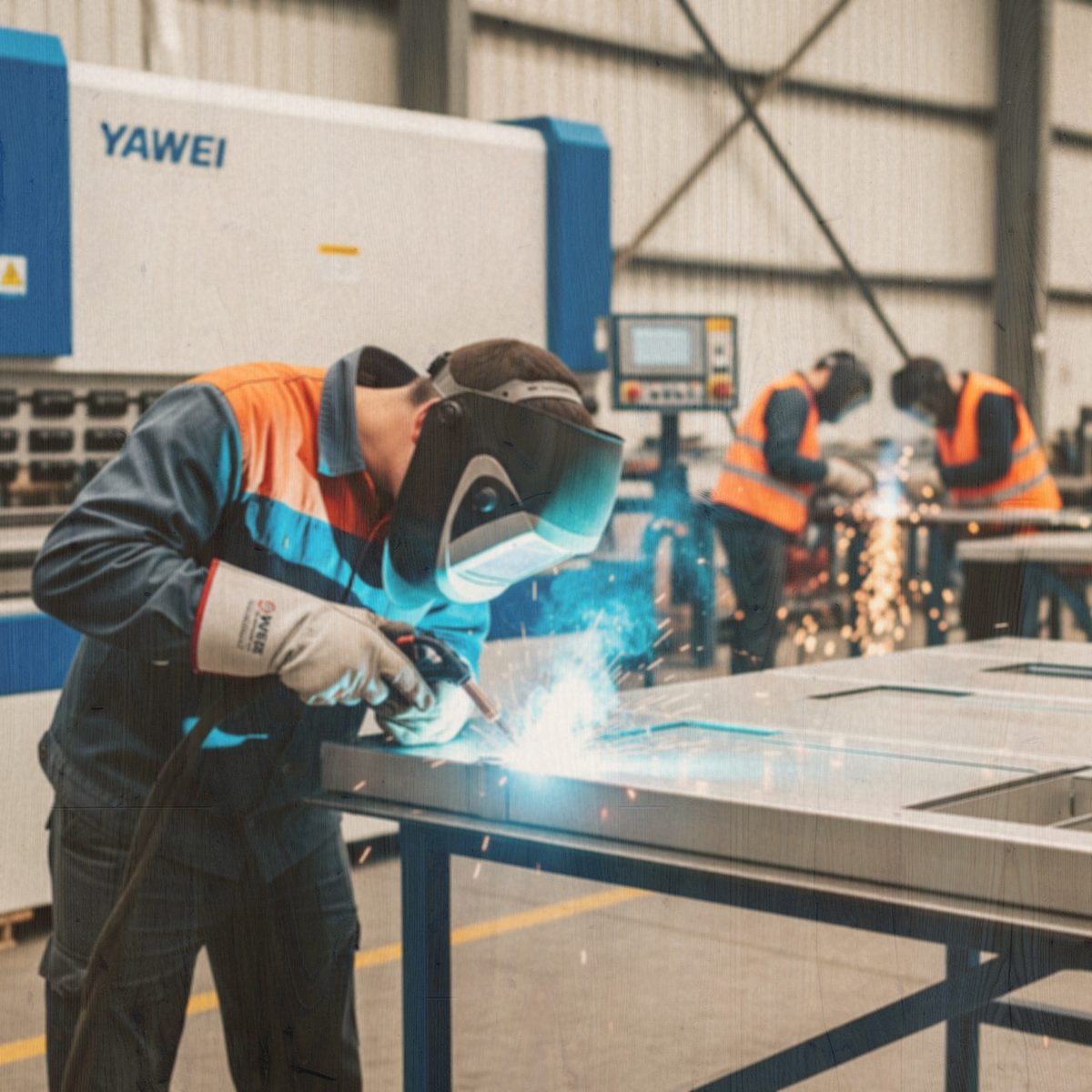
- Welding Helmets with Auto-Darkening Lenses — protect eyes and face.
- Cut-Resistant Gloves — guard against sharp edges.
- Hearing Protection — earmuffs in noisy operations.
- Steel-Toe Boots — mitigate foot injuries.
- Respirators — for airborne particulates during grinding.
Ergonomic workstations feature adjustable benches, anti-fatigue mats, and lift assists for heavy loads. Positioning tools and controls within easy reach prevents repetitive strain and musculoskeletal injuries.
Quality Management and Error Prevention
Quality management systems ensure consistent output, reduce costly rework, and foster customer satisfaction. Key QC processes include:
- Incoming material inspection to verify certifications and dimensions.
- In-process checks at critical weld and machining stages.
- Statistical Process Control (SPC) to track variation trends.
- Non-Destructive Testing (NDT) methods such as ultrasonic testing and dye penetrant analysis.
Employee Well-being
Employee well-being extends beyond physical safety into mental resilience, fatigue management, and an uplifting culture. Effective fatigue management includes ergonomic work-rest cycles, shift rotations, workload monitoring, and wellness education on hydration, nutrition, and sleep hygiene.
Clear, timely communication — through daily huddles, digital dashboards, and status boards — aligns expectations and prevents misunderstandings. When teams share updates and flag issues early, stress from surprises dissipates.
Key KPIs to Measure Stress Reduction
- Overall Equipment Effectiveness (OEE) — availability, performance, and quality.
- First Pass Yield — percentage of defect-free parts.
- Staff Turnover Rate — indicator of satisfaction.
- Incident Rate — recordable injuries per hours worked.
- On-Time Delivery Rate — confirming process reliability.
Maintaining a stress-free metal fabrication shop demands a holistic approach that aligns lean methods, technology integration, safety rigor, quality management, and employee well-being. By weaving these elements into daily operations, shop managers create a stable, empowered environment where productivity thrives and stress is steadily reduced.